South Korea and China race for Arctic trade route
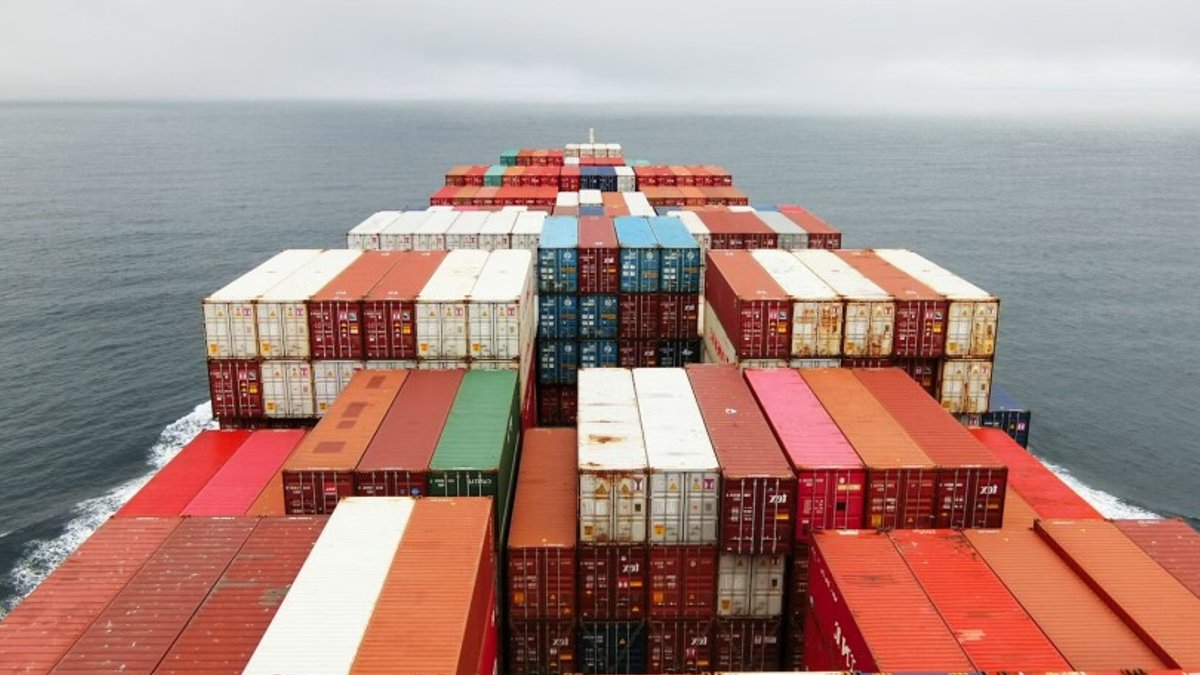
South Korea is preparing to send a commercial container ship through the Arctic Ocean later this month, aiming to prove the route is viable amid growing bottlenecks in traditional Middle Eastern shipping lanes. The Lee Jae Myung administration has prioritized the Northern Sea Route as a national strategic goal, betting that year-round navigation through polar waters will become commercially feasible around 2030. To support this push, the government has allocated KRW549.9bn ($398mn) to build five specialized icebreakers over the next five years.
The proposed voyage reduces the maritime distance between Busan and Rotterdam by roughly 8,000 km, which cuts over ten days off the travel time compared to the traditional Suez passage. Operating expenses are also lower, with per-voyage costs averaging around $3mn during summer months. This figure is 22% less than the $3.83mn estimated for the Suez route, according to research from the Korea Maritime Institute (KMI). In 2025, South Korea’s container throughput hit a record 31.73mn TEUs.
Seoul is leveraging the polar push to advance domestic maritime ambitions. The administration aims to transform Busan into a regional logistics hub modeled on Singapore by collocating regulatory bodies, financiers and operators. National carrier HMM will begin relocating its headquarters to the city from late 2026.
Related: Ukraine hits Russian Ozon for first time as Russia strikes Kryvyi Rih
Energy security and the Russian pivot
Energy security is an equally vital driver. The Arctic region holds roughly 30% of the world’s undiscovered natural gas and 13% of its oil. While Seoul has moved to diversify crude supplies, the immediate opportunity lies in liquefied natural gas (LNG). Novatek’s Yamal LNG project in northwestern Siberia produces low-cost fuel that has historically undercut supplies from Qatar or the US. With the EU set to ban Russian LNG imports by 2027, substantial uncommitted volumes will seek Asian buyers.
“With Europe’s exit, that supply will need to find new homes,” said Choi Su-beom, Secretary-General of the Korea Arctic Shipping Association, according to Korea JoongAng Daily. “China, India and Vietnam will absorb some portion, but the volumes involved mean significant quantities will remain available — and Korea is well positioned to compete for them.”
Handling diplomatic and legal hurdles
The trial voyage will be operated by Busan-based ferry company PanStar using the PanStar Acro, a 2,700-TEU container vessel purchased from HMM and modified for polar conditions. The ship is carrying automobile parts, food and cosmetics, alongside freight from Japanese clients. Crewed by 20 Korean and Indonesian mariners, the vessel will sail north from Busan, call at Felixstowe in Britain, Rotterdam in the Netherlands and Gdansk in Poland during a 40 to 45-day round trip.
Related: Tourists Hit with Hidden Credit Card Fees
Despite the obvious commercial logic, using the NSR runs directly through a diplomatic minefield. Transiting the route legally requires using Russian icebreakers, employing specialized local pilots and paying permit fees to Rosatom, Russia’s state nuclear enterprise. These mandatory overheads have driven global operators like MSC to boycott the passage entirely.
This necessary coordination with Moscow has upset Western allies seeking to isolate Russia over its war in Ukraine. “We want to isolate Russia, we don’t want engagement with Russia,” a European diplomat told Reuters on August 20, 2026, adding that concerns had been conveyed directly to South Korean officials. Analysts also warn that requesting Russian emergency assistance during the voyage could run afoul of Western sanctions.
Insurance remains another major friction point. Arctic waters are excluded from standard Protection and Indemnity (P&I) coverage and carry high war-risk premiums. Vessels must be built to ice-class standards, and those ships cost far more than conventional ones, according to KMI researcher Hwang Jin-hoi. Yet an expensive ice-class vessel can only operate on the Arctic route for three months, or four to five months at best, leaving the question of where to deploy it for the rest of the year.
Related: Google Denies Refund for Removed Film Purchase
Arctic waters are excluded from standard Protection and Indemnity (P&I) coverage and carry high war-risk premiums. Vessels must be built to ice-class standards, and those ships cost far more than conventional ones, according to KMI researcher Hwang Jin-hoi. Yet an expensive ice-class vessel can only operate on the Arctic route for three months, or four to five months at best, leaving the question of where to deploy it for the rest of the year.
Commercial container ships can only traverse the passage during the three summer months when ice melts, former naval officer Hyewon Choi noted in a study published in Ocean Policy Research. Despite these hurdles, traffic along the corridor is accelerating. According to data from the Centre for High North Logistics, 88 vessels made 103 transits through the NSR in 2025, up from 97 in 2024 and 43 in 2022.

Ukraine hits Russian Ozon for first time as Russia strikes Kryvyi Rih


