G20 roadmap makes cultural IP economic priority
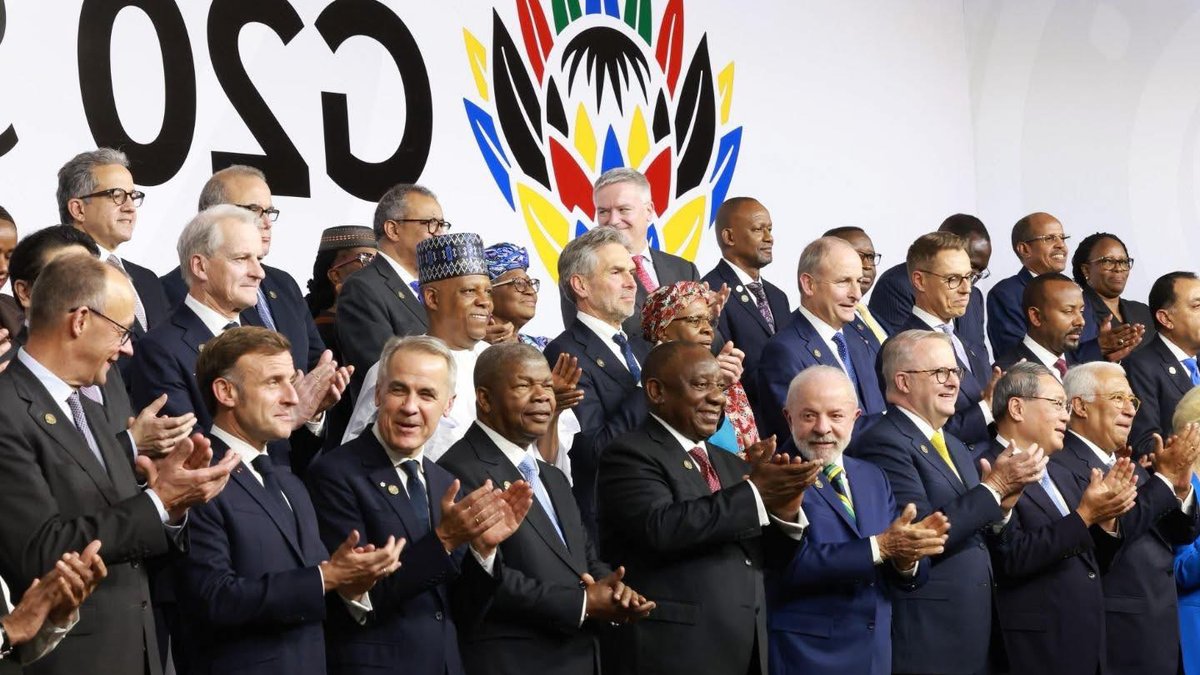
World leaders at the G20 meeting in Johannesburg on November 24, 2025 released a roadmap that calls for Cultural Intellectual Property to be treated as a core component of macro-economic policy across African nations, marking a historic step toward integrating culture into economic planning.
Economic weight of cultural assets
UNESCO and WIPO estimate that cultural IP contributes roughly $2.3 trillion to global GDP each year and supports about 30 million jobs worldwide.
Although cultural industries account for just over 3 percent of worldwide output, they remain largely absent from fiscal calculations.
In Africa, the African Development Bank projects that fully formalized creative-sector IP could generate more than $20 billion annually.
McKinsey research adds that generative AI may unlock up to $7.9 trillion in yearly economic value, much of it derived from the data that trains these models, highlighting it as essential national infrastructure.
Roadmap details and institutional roles
The roadmap, drafted by the African Union Development Agency (AUDA-NEPAD), AXM and the Africa Investor (Ai) Group, outlines registries, standards and governance protocols to turn culture into an investable public asset.
It aligns with the African Union’s Agenda 2063, emphasizing digital sovereignty and the creation of new pathways for African states to own and monetize creative and cultural assets.
“We’re mapping an opportunity to build long-term value for African creators and economies,” said Pamla GoPaul, Senior Programme Manager, Africa Policy Bridge Tank, Economic Analysis and Foresight Unit, AUDA-NEPAD.
Dr. Hubert Danso, Chairman and CEO of Africa Investor, added that culture functions as a macro-economic engine, flowing through creative industries, tourism, digital platforms and AI, yet its rights systems remain fragmented.
Archie Davis, Co-Founder of AXM, warned that without proper digital infrastructure, creators are excluded from the economies they sustain, and that linking cultural IP to macro-economic frameworks can enable equitable participation.
Africa Policy Bridge Tank and Africa Investor Platforms
The AUDA-NEPAD Africa Policy Bridge Tank serves as a continental knowledge-to-policy platform linking research institutions and decision-makers. It connects African think tanks, academia, and policymakers to co-create evidence-based solutions that align with Agenda 2063. Anchored in the African Union’s development vision, it supports the co-production of policy-relevant knowledge, strategic foresight, and systems thinking for development strategies.
Technology to enable cultural finance
AXM’s Authorship DPI Standard provides a digital public-infrastructure model that modernizes registration, governance and licensing of cultural assets, giving them a legal, digital and economic presence.
The patent-pending system turns authorship from an abstract right into programmable infrastructure, making it measurable, enforceable and interoperable across human and machine contexts, including AI training.
For estates, institutions and individual creators, this means their works can be recorded, valued and licensed with transparent, auditable governance.
Implications for creators and markets
By embedding cultural assets in national accounts, governments can attract investment that treats creative works like any other public good, opening channels for sovereign wealth funds and pension schemes to allocate capital to the sector.
When it is recognized as an asset class, cultural IP can be securitized, bundled and traded, providing new revenue streams for artists and institutions alike.
These mechanisms aim to shift the current dynamic where external parties extract value from African culture without equitable returns.
Overall, the initiative seeks to transform cultural production into a visible, accountable component of economic development, offering creators a tangible stake in the digital economy.

Africa’s capital shortage stems from lack of investable projects


