1990 leadership book nails AI era demands
In 1990, Peter Senge published The Fifth Discipline: The Art and Practice of the Learning Organisation. The book sold over two million copies and was later named one of the most influential management books of the past 75 years. Its ideas appealed to leaders but were hard to apply in real workplaces.
Senge’s framework included five key practices. Systems thinking meant viewing organizations as interconnected wholes rather than isolated parts. Personal mastery required individuals to pursue continuous learning and honest self-assessment. Mental models involved recognizing the assumptions that shape decisions. Shared vision demanded collective commitment, not just agreement with leadership goals. Team learning meant groups thinking together in ways no single person could achieve alone.
For 35 years, these ideas stayed mostly theoretical. Organizations saw their value but found them difficult to implement. Then AI emerged, exposing the gaps Senge had identified.
Related: Staying Healthy at the Office with Technology
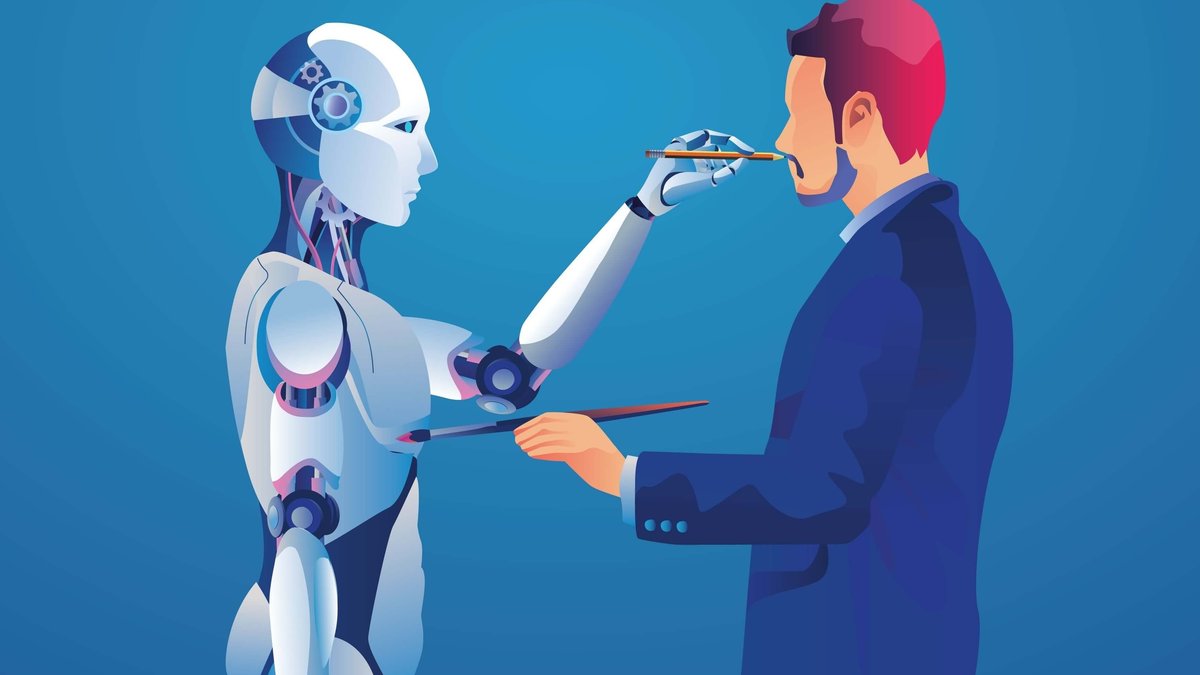
AI handles optimization, pattern recognition, and large-scale data processing. It cannot decide which goals matter, imagine new possibilities, or contribute to collective wisdom. These human skills align exactly with what Senge described—abilities no AI can replicate.
Senge didn’t foresee AI, but he outlined the skills that would define effective leadership in an AI-driven era. The challenge wasn’t the vision itself but the lack of practical tools to make it work. Methods like causal loop diagrams and computer-simulated microworlds were too abstract for daily use. Leaders understood what they needed but had no clear way to achieve it.
The solution came from combining three existing methods in a way that finally made Senge’s ideas practical.
Related: HoneyNaps gets FDA clearance for AI sleep device
LEGO® Serious Play®, created in the late 1990s, makes invisible organizational forces visible. Teams build three-dimensional models of their workplaces, revealing unspoken assumptions and patterns. What’s hard to explain in words becomes clear when constructed with hands. The process is collaborative, not led by an expert drawing diagrams for others.
Senge’s book provides the strategic framework—what to aim for and what to watch.
The most effective leaders in the coming decade won’t be those with the most advanced AI. They will be the ones who invest equally in the skills AI cannot replace—skills Senge described decades ago.

Staying Healthy at the Office with Technology


