Tajikistan Hunts Risky Glacial Lakes
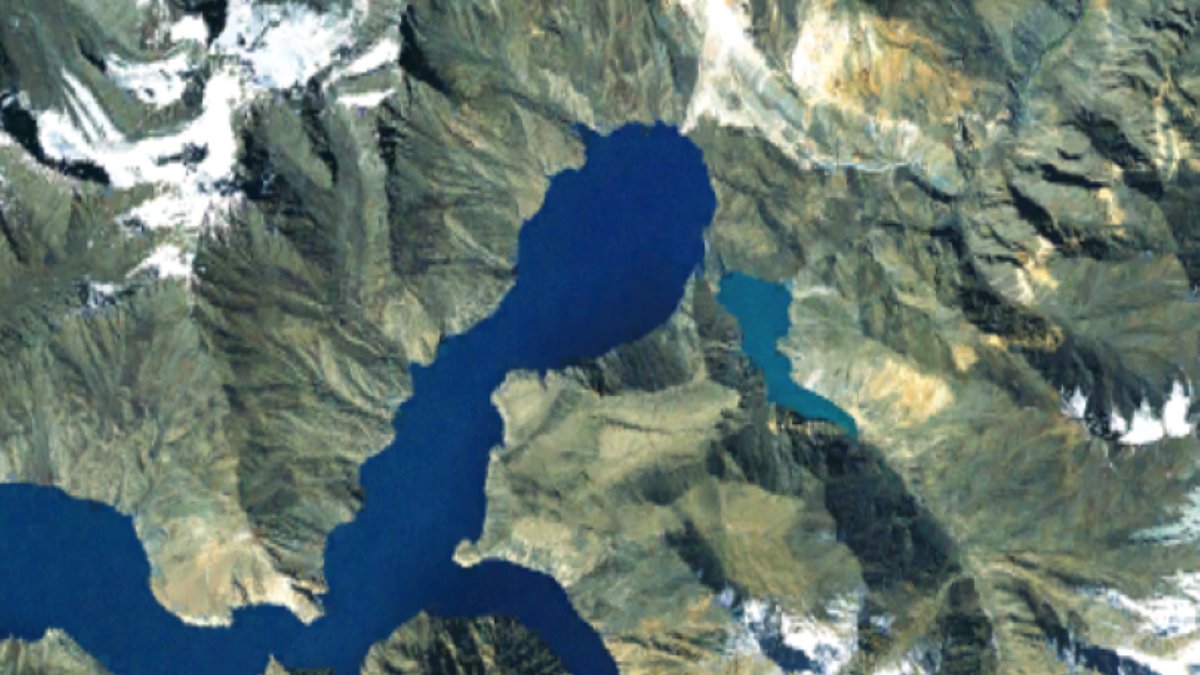
Tajikistan is using satellite technology to search for mountain lakes that pose a risk of catastrophic outbursts, following a recent disaster in the Nepal-Tibet border region. The announcement comes as rescuers continue to search for survivors of the August 26 disaster, which claimed the lives of hundreds, and likely thousands, after a wall of water was released by a glacial collapse.
As of August 30, around 3,000 people were still missing. Among the lakes being monitored for changes are Lake Sarez and other high-altitude water bodies of the Pamir mountains, including the glacial lakes of Baralmoos.
Glacial lake outburst floods pose a particular threat to life and property, as the flow can carry large volumes of water, rocks, ice, and mud, which can destroy roads, homes, and agricultural land. They are using the Transient Hydrologic Anomalies Weekly (THAW) automated tool to monitor these lakes for changes.
Lake Sarez was formed in 1911 after an earthquake struck the Rushon District of Tajikistan’s eastern Gorno-Badakhshan Autonomous Oblast (GBAO). The tremor caused a landslide that blocked the Murghab River, creating the lake, which spans 61 kilometers in length and reaches depths of 500 meters.
Seismologists remain worried that another major earthquake in the vicinity could cause catastrophic flooding of land below the location of the lake. Reporters noted that scientists have detected some land movement in the slopes around the lake, which research suggests contains approximately 16-17 cubic kilometers of water.
Related: Japan’s top banks report record profits
In June 2024, a proposal was reported to export freshwater from Sarez to Gulf countries and other regions experiencing water stress and scarcity. The THAW system uses data from the Sentinel-1 SAR satellite and the Google Earth Engine platform to locate water bodies that require additional monitoring.
Climate change is leading to accelerated glacier melting and the formation of new unstable lakes in high-altitude areas. According to an academic’s research data, Tajikistan has approximately 500 to 600 glacial lakes.
The glaciers in Tajikistan are a significant source of freshwater, but they also pose a risk to the surrounding communities. As the country continues to monitor the lakes and develop strategies for prevention, the threat of GLOF will remain a concern for the foreseeable future.
Tajikistan’s efforts to monitor and prevent GLOF are part of a broader trend of countries using technology to address the challenges posed by climate change, such as the use of LNG tankers in other regions.

Denmark's Fayard Shipyard Receives Third Russian LNG Tanker


