Investors Eye Compensation After France October Unrest
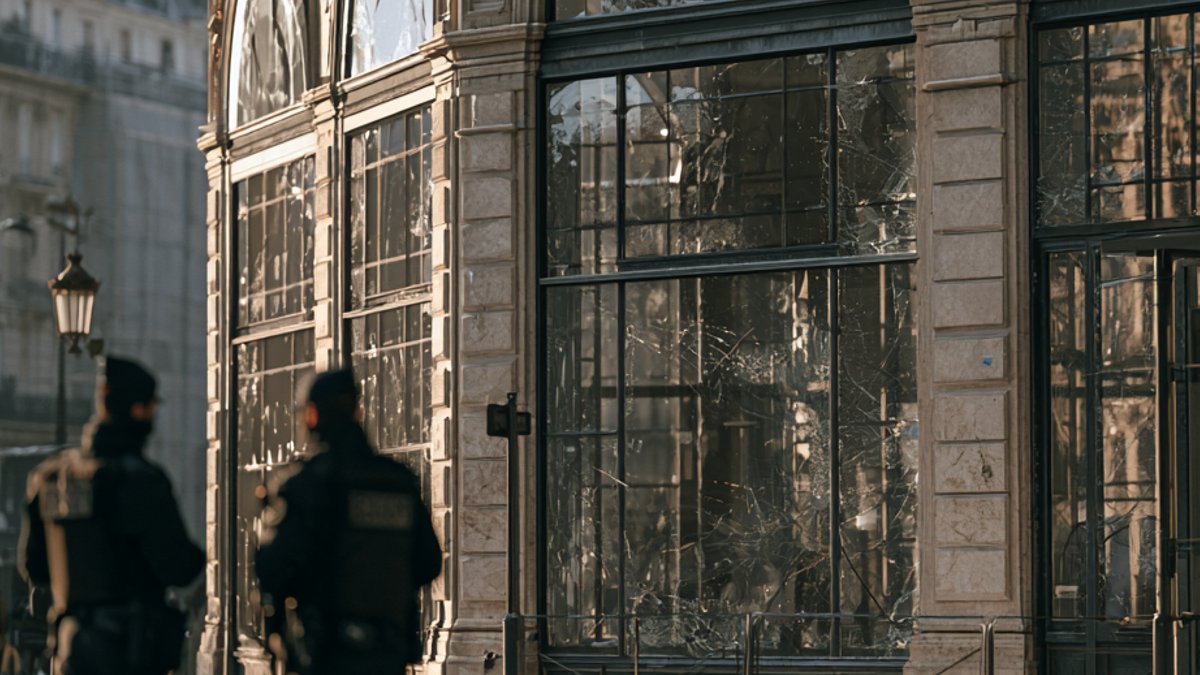
The riots themselves do not automatically entitle investors to compensation from France. Each investor must identify the relevant legal protections, prove their losses, and establish a connection to the specific incident.
Reports from October 18 primarily detail damage occurring on October 17, but they should not be considered definitive proof that all reported losses happened within that timeframe. The Fédération du commerce et de la distribution initially estimated that around 1,500 businesses were impacted, though it emphasized the preliminary nature of this financial assessment.
Insurance as the Primary Option
Foreign-owned businesses in France should initially review their insurance policies, including coverage for property, theft, fire, glass breakage, and riots. Business-interruption insurance is separate, and compensation for lost gross margin due to closures typically depends on policy terms, particularly whether physical damage covered by the policy occurred.
Immediate steps include notifying insurers within contractual and legal deadlines, preserving evidence before repairs, and documenting emergency expenses. Claims should differentiate between physical damage to buildings, equipment, and inventory; debris removal; security measures; emergency repairs; and business-interruption losses, where applicable.
French Law and State Responsibility
Article L.211-10 of the French Internal Security Code holds the state liable for damage resulting from crimes or offenses committed openly or violently by crowds or gatherings, whether armed or unarmed, against persons or property. This route may be more accessible than investment-treaty arbitration, as it generally does not require proof of police negligence.
However, claimants must meet three key conditions: a criminal offense, the use of open force or violence, and conduct attributable to a qualifying crowd or gathering. They must also demonstrate the resulting damage and its causal link to the incident. Distinguishing between a gathering and an organized criminal group is critical, as highlighted in the Conseil d’État’s decision of October 11, 2023, No. 465591. Related cases, such as Société Generali IARD and Ministre de l’intérieur v. Société SANEF, offer further insights into this distinction.
Investment Treaties and Arbitration
A qualifying investor may also argue that France breached a treaty obligation to provide full protection and security. However, foreign nationality alone is not sufficient. Legal counsel must identify an applicable treaty, a protected investment, a qualifying investor, and valid consent to arbitration. The standard is typically due diligence, not an absolute guarantee against violence.
A claimant would need evidence that French authorities failed to take reasonable protective measures in the circumstances and that this failure caused compensable losses. Relevant cases, such as Wena Hotels v. Egypt and AAPL v. Sri Lanka, illustrate the difference between successful and unsuccessful claims. In Wena Hotels v. Egypt, liability was established due to authorities’ failure to prevent known hotel seizures and provide adequate remedies. In contrast, AAPL v. Sri Lanka rejected strict liability but found a failure to take reasonable precautions.
For claims against France, specific warnings or documented refusals to respond to identifiable threats may carry more weight than general descriptions of “chaos.” EU investors face a significant arbitration hurdle due to the Court of Justice’s Achmea judgment, which ruled that intra-EU bilateral investment treaty arbitration clauses are incompatible with EU law.
Compiling a Compensation Case
The most effective approach is to create a detailed chronology linking the asset, the violence, the official response, and the financial consequences. Essential materials include dated photographs, CCTV footage, complaints, emergency-call records, witness statements, ownership documents, inventory records, repair estimates, and accounts supporting interruption losses.
Precise location and timing are particularly important, as French crowd-liability rules hinge on the relationship between the damage and the gathering, while treaty claims focus on the state’s reasonable protection. The October events may provide the factual basis for compensation but do not guarantee it automatically.
Insurance and French statutory liability should be evaluated alongside any treaty-based remedy, taking care to avoid inconsistent proceedings or double recovery. Affected investors should consult French legal counsel and, if treaty protection is plausible, seek investment-arbitration advice before selecting a forum. By thoroughly assessing applicable legal protections and gathering relevant evidence, investors can enhance their chances of obtaining compensation for damaged assets. As noted by Paul de Neuville, Paris correspondent for Eurasia Business News, in Article no 3216, dated October 19, 2026, foreign investors whose assets were damaged during the October unrest in France may explore compensation through insurance, French state liability, and investment-treaty arbitration.


