Discarded climate models were right, targets wrong
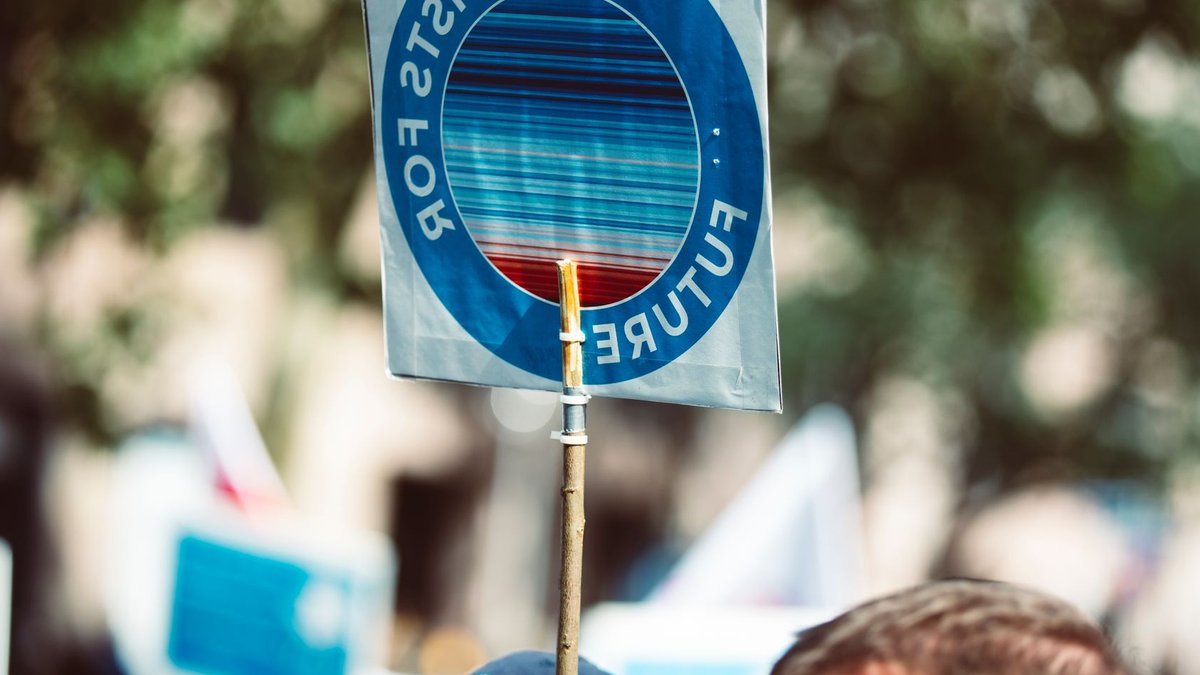
Climate models discarded for predicting too much warming were right, and the models used to set the Paris Agreement targets are now shown to be wrong, according to a new study published in the journal Earth’s Future. The Paris Agreement aims to limit temperature increases to less than 1.5°C to 2°C above pre-industrial levels, but the Intergovernmental Panel on Climate Change’s baseline relies on calculations from about 20 coordinated predictions. As the climate crisis has accelerated over the last four years, global warming is running faster than these models projected, and temperature increases are on course to reach a catastrophic 2.7°C to 3.1°C by 2050, according to the IPCC. The new research by a team at ETH Zurich rebuilds the way climate models are graded against reality and finds that the best-performing ones project substantially more warming than the current consensus. “For a given emission trajectory, we expect warming to be 25% higher,” said Gergana Gyuleva, who led the study. The difference between a bad century and an unrecognizable one is produced not by any change in emissions but by a change in which models are trusted. The Climate Action Tracker currently puts the world on course for 2.6°C above pre-industrial levels by 2100 if countries do what they have already promised, which most of them are not doing. On Gyuleva’s team’s numbers, the same policies deliver 3.25°C. If permafrost melts in Russia and the north completely disappears at a 3°C increase, it leads to catastrophic and unpredictable consequences.
Related: Japan’s top banks report record profits
Testing the math against reality
Climate models disagree sharply about how much the planet heats for a given amount of carbon dioxide. Some put the short-term response to a doubling of CO₂ at around 1.6°C; others at close to 3°C. The standard test has been to run the models over the recent past, feed in the last century’s greenhouse gas emissions, compare the warming the model produces against the warming that actually happened, and keep the ones that match. For the IPCC’s last report, a lot of models simulated more warming than had been observed, so they were discounted. What survived gave a short-term response to doubled CO₂ of between 1.2°C and 2.4°C, with a best estimate of 1.8°C.
Related: Bipartisan bills to boost home sales via expanded capital gains exclusion
The problem with grading models against the observed record is that the observed record contains weather as well as climate. During a La Niña, cooler water from the deep ocean spreads across the surface and global temperatures dip; the reverse happens in an El Niño. None of that says anything about how sensitive the climate is to CO₂. Gyuleva’s team filtered the historical record to strip that variability out and found it had been pushing in one direction. Natural variability suppressed measured warming between 1981 and 2014—a window that includes the so-called global warming hiatus of the 2000s, and the exact window the earlier model-grading papers used. “It’s really exactly this period 1981 to 2014, which was used in the previous papers, where you see the strongest bias down,” said Gyuleva. “It was really bad luck.” Correcting for that alone raises the estimate of how much warming a doubling of CO₂ produces. The models were not too hot; the three decades they were being judged against were unusually cool.
Related: Tourists Hit with Hidden Credit Card Fees
Measuring the heat, not the thermometer
The team then added a second test that does not use surface temperature at all. Satellites have been measuring how much short-wave radiation from the sun enters the atmosphere—the earth’s energy imbalance (EEI)—and how much long-wave radiation leaves it. The planet’s energy imbalance is the most fundamental measure of global warming there is, and one that does not care where the ocean has moved its heat this decade. Because the satellite measurements only start in 2001, this kind of assessment has become possible only recently. How well a model reproduces the observed trends in incoming and outgoing radiation is a harder test than how well it reproduces surface temperature. The models that best match those radiation trends project much more warming. Taking the models that perform well on both tests, the team puts the short-term response to a doubling of CO₂ at between 1.9°C and 2.6°C, with a best estimate of 2.25°C—against the IPCC’s 1.8°C. “Our results need to be confirmed by more evidence from different sources before we can be fully confident,” Gyuleva said.

Japan’s top banks report record profits


