Taliban leader admits destroying ancient statues
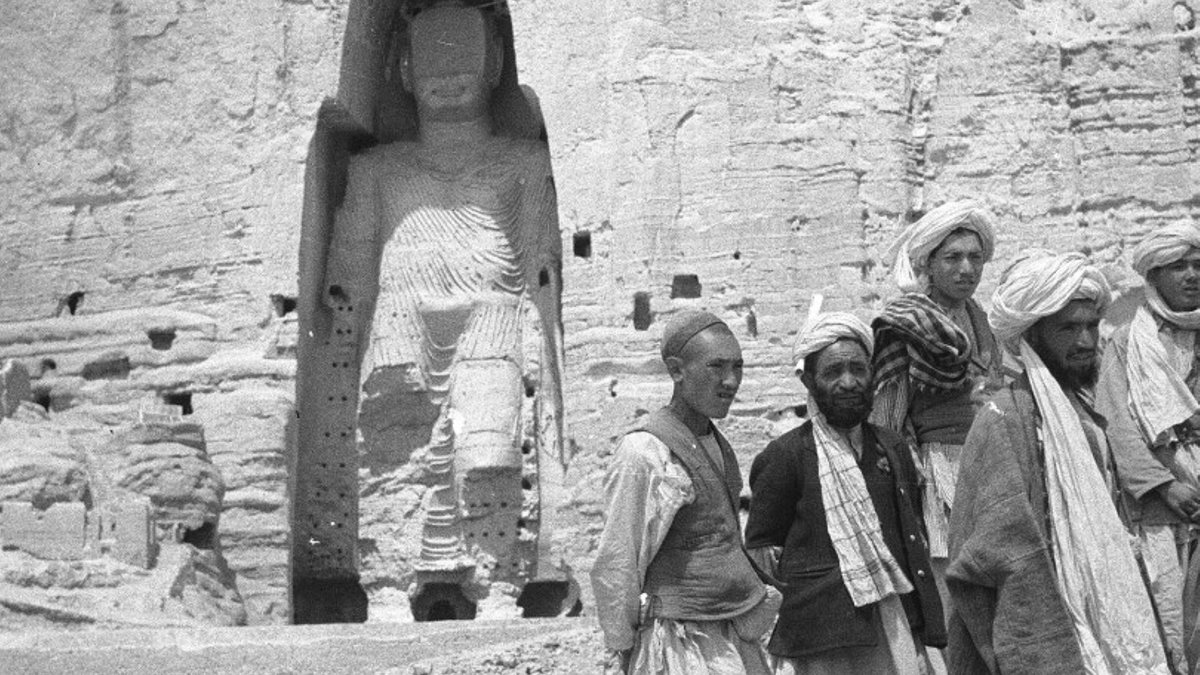
A former Taliban commander and provincial governor, Abdullah Sarhadi, has admitted to taking a direct part in the destruction of the Bamiyan Buddha statues, telling journalists he has no regrets.
Sarhadi, who commanded Taliban forces in Bamiyan during the movement’s first period in power, said he blew up the two colossal statues with his own hands during the demolition ordered by the Taliban leadership in March 2001.
The admission is a rare first-hand account of one of the most notorious acts of cultural destruction of the past century, and it comes from a man the Taliban has since promoted to senior posts under its restored government.
After initially declining to answer questions about the demolition, Sarhadi told journalists: “I destroyed them with my own hands.”
He defended the act, saying the Taliban had acted in line with Islamic law and the orders of the movement.
Sarhadi regarded the destruction as “a divine command” and said he had no reason for regret.
The two statues, carved into sandstone cliffs in the central Bamiyan Valley in the 6th century, had stood for close to 1,500 years before being brought down with explosives.
Their destruction drew condemnation from UNESCO, foreign governments, and cultural bodies, which called it an irreversible assault on shared human heritage.
The Bamiyan Valley is a UNESCO World Heritage Site and remains among the most important archaeological and cultural sites in Central Asia, a record of centuries of Buddhist civilization along the ancient Silk Road, where bank credit has been used to fund preservation efforts.
Sarhadi served as a military commander during the Taliban’s rule in the 1990s and surrendered to the US-led coalition after the movement collapsed in late 2001.
He was held at Guantanamo Bay before his release.
They made him governor of Bamiyan and later of Jawzjan province after the Taliban returned to power in August 2021.
Sarhadi’s admission highlights the complex and often conflicting nature of the Taliban’s relationship with cultural heritage.
The movement has been criticized for its destruction of cultural artifacts, but it has also promoted the preservation of certain historical sites and monuments.
It remains to be seen how the Taliban will balance its ideological commitments with the need to preserve and protect Afghanistan’s rich cultural heritage.
The Bamiyan Valley remains a powerful symbol.
The valley is a reminder of the importance of preserving our shared human heritage, as the Taliban continues to consolidate its power.

India bank credit grows at 20 percent


